Kim & Chang successfully represented Rimowa, the renowned German luxury travel luggage manufacturer, in two design invalidation disputes concerning imitation “earphone cases” that copied the company’s iconic groove design.
Rimowa has incorporated its signature parallel grooves, a distinctive three-dimensional striped pattern, into its luggage products since the 1950s. This groove design is a key component of Rimowa’s brand identity and has become widely recognized by consumers worldwide as the quintessential “Rimowa style.” Over the years, this design has been emulated on various small accessories such as pouches, cigarette cases, and electronic device cases, with some of these imitations even being filed or registered as designs in Korea.
|
Rimowa’s Travel Luggage Design |
Counterparty’s Earphone Case Designs |
|
|
|
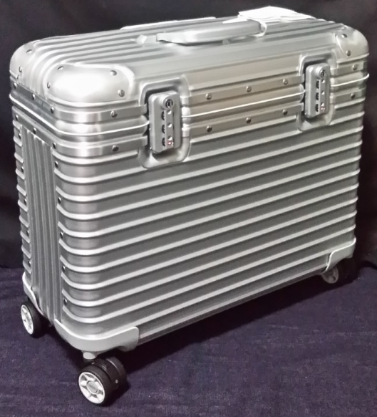
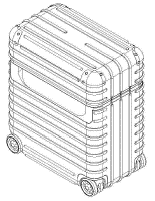
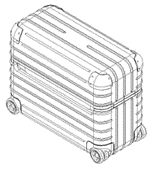
To protect its brand identity, Rimowa retained our firm to file design invalidation actions against two registered designs for “earphone cases” that adopted the same groove-patterned exterior. The Intellectual Property Trial and Appeal Board agreed with Rimowa and invalidated both designs, finding that they could have been easily created from Rimowa’s prior luggage design.
The counterparty appealed both cases to the IP High Court, arguing that a designer would not naturally derive an earphone case from a travel suitcase because the two products differ significantly in size, structure, purpose, and functionality.
Our firm overcame these arguments by demonstrating the close functional and visual similarity between the two products, both serving protective and portable purposes with comparable box-like structures. We showed that designers frequently adapt luggage aesthetics to smaller cases, and provided extensive examples of market usage where consumers and sellers alike referred to similar accessories as “Rimowa-style cases.” Our firm also provided evidence that the differences cited by the counterparty merely reflected natural modifications made when translating a large suitcase design into a small accessory.
The IP High Court fully accepted Our firm’s arguments and affirmed the invalidations, holding that a designer could easily create the subject earphone case designs by applying Rimowa’s well-known groove design to a smaller product. The court further clarified that, in assessing design creativeness, the products need not be identical or similar to the prior design’s product; rather, the relationship in function, structure, and common design trends across product categories may be equally relevant.
These cases are significant because they confirm that a brand’s core design identity, such as Rimowa’s groove pattern, can receive broad protection even across different product categories. They establish important precedents for rights holders whose signature designs are increasingly imitated in the accessory market.
The matters also hold procedural significance. As international trial cases, these were the first international trials in Korea conducted through full video hearings, enabling Rimowa’s German representative to participate remotely and present closing arguments via real-time video. This marked a meaningful advancement in the Korean judiciary’s accommodation of international IP disputes and is expected to support more efficient global litigation practices going forward.


